10 Best Route Mapping Software Options for 2026 — Routelink
Compare the best route mapping software for delivery teams, including features, pricing models, use cases, limitations, and trial advice.
26 September 2026 · Routelink Team
10 Best Route Mapping Software Options for 2026
Compare the best route mapping software for delivery teams, including features, pricing models, use cases, limitations, and trial advice.
A small retailer may be planning local drops from a spreadsheet, while a direct-to-consumer operation is dealing with fluctuating order volume and customer ETA questions. A heavier fleet may need truck-aware navigation, vehicle capacity rules, or routing connected to telematics. All three need maps, but they don’t need the same delivery system.
This roundup compares the best route mapping software by operating model, not by map quality alone. The practical differences are in route optimization, dispatch, proof of delivery, customer visibility, integrations, pricing structure, and rollout effort. Routelink is the reference point for browser-based local delivery operations, while the right alternative may be better for a telematics-led fleet, scheduled heavy deliveries, or a multi-merchant workflow.
The market has moved well beyond simple point-to-point navigation. One market estimate valued route optimization software at USD 8.51 billion in 2023 and projected USD 21.46 billion by 2030, with a projected 14.4% CAGR from 2024 to 2030 according to Grand View Research’s route optimization software analysis. That growth reflects a shift toward systems that plan, execute, monitor, and document deliveries.
Table of Contents
- 1. Routelink
- 2. Onfleet
- 3. Routific
- 4. OptimoRoute
- 5. Route4Me
- 6. WorkWave Route Manager
- 7. Samsara
- 8. Track-POD
- 9. Verizon Connect Reveal
- 10. Tookan
- Top 10 Route Mapping Software Comparison
- Turn the Shortlist Into a Controlled Trial
1. Routelink
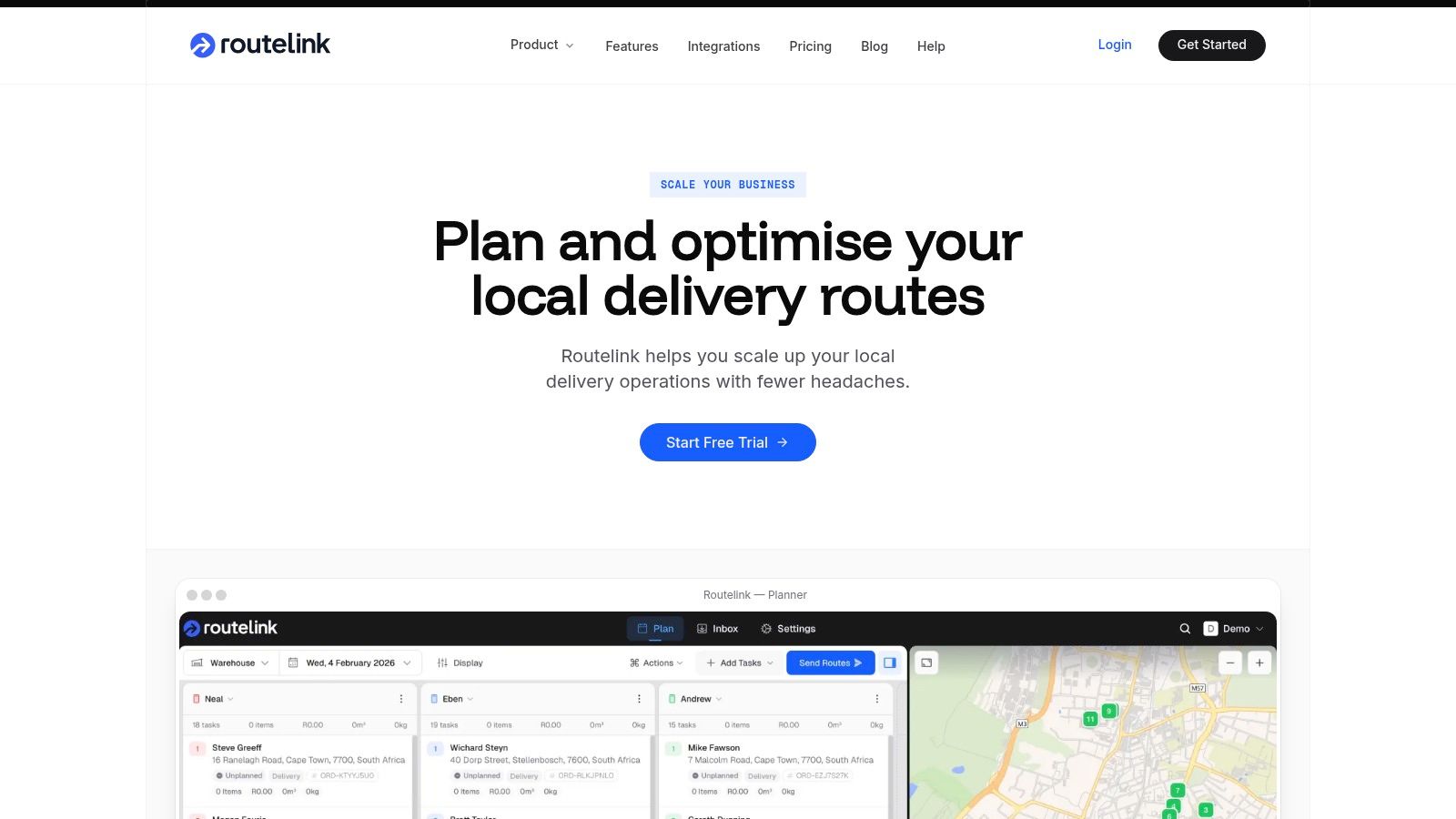
Routelink is the strongest starting point for 1PL operations, local retailers, distributors, and multi-depot delivery teams that want one browser-based workflow. It brings order intake, route planning, dispatch, live tracking, customer notifications, proof of delivery, and post-run analytics into the same system.
The intake process is practical for teams that aren’t ready for a complex implementation. Dispatchers can import CSV or XLSX files using a template, preview the data, and work with tolerant parsing when spreadsheets contain extra columns. Shopify and WooCommerce connections support ecommerce workflows, while Zapier, webhooks, and Business-tier API access extend the platform into ERP and CRM environments.
Routelink also checks addresses during intake. It automatically geocodes stops, flags weak matches, and lets a dispatcher correct an address or drop a pin before planning. That matters because a perfectly optimized route is still unusable if one stop can’t be mapped accurately.
Best fit for fast local rollout
Routelink’s clearest differentiator is driver deployment. Drivers and subcontractors receive secure, PIN-protected browser links instead of downloading a native app. A seasonal driver can use the workflow on a smartphone, and one device can support multiple routes during a day.
The planning board supports multiple depots, date-based operational views, auto-assignment, drag-and-drop edits, zones, geofences, and route templates. Capacity visibility covers items, weight, and volume, with overload warnings that help dispatchers catch a route problem before departure.
Drivers can use Google Maps navigation, capture sign-on-glass confirmation, take photos, record failure reasons, and add notes. Branded tracking pages and configurable email, SMS, or WhatsApp notifications give customers status visibility without requiring the dispatcher to answer every delivery call.
Practical rule: Test Routelink with the messiest spreadsheet and the least technical driver in your operation. That will reveal more about rollout effort than a polished demo.
Routelink’s pricing is published at routelink.app/pricing: R1,500, R4,500, or R13,500 per month (excl. VAT), plus R300 per extra device. The free trial provides a way to assess the workflow, while higher tiers support custom integrations, API access, and webhooks. Browser delivery depends on mobile connectivity and Google Maps, so teams operating in poor-signal areas should test that limitation directly.
2. Onfleet
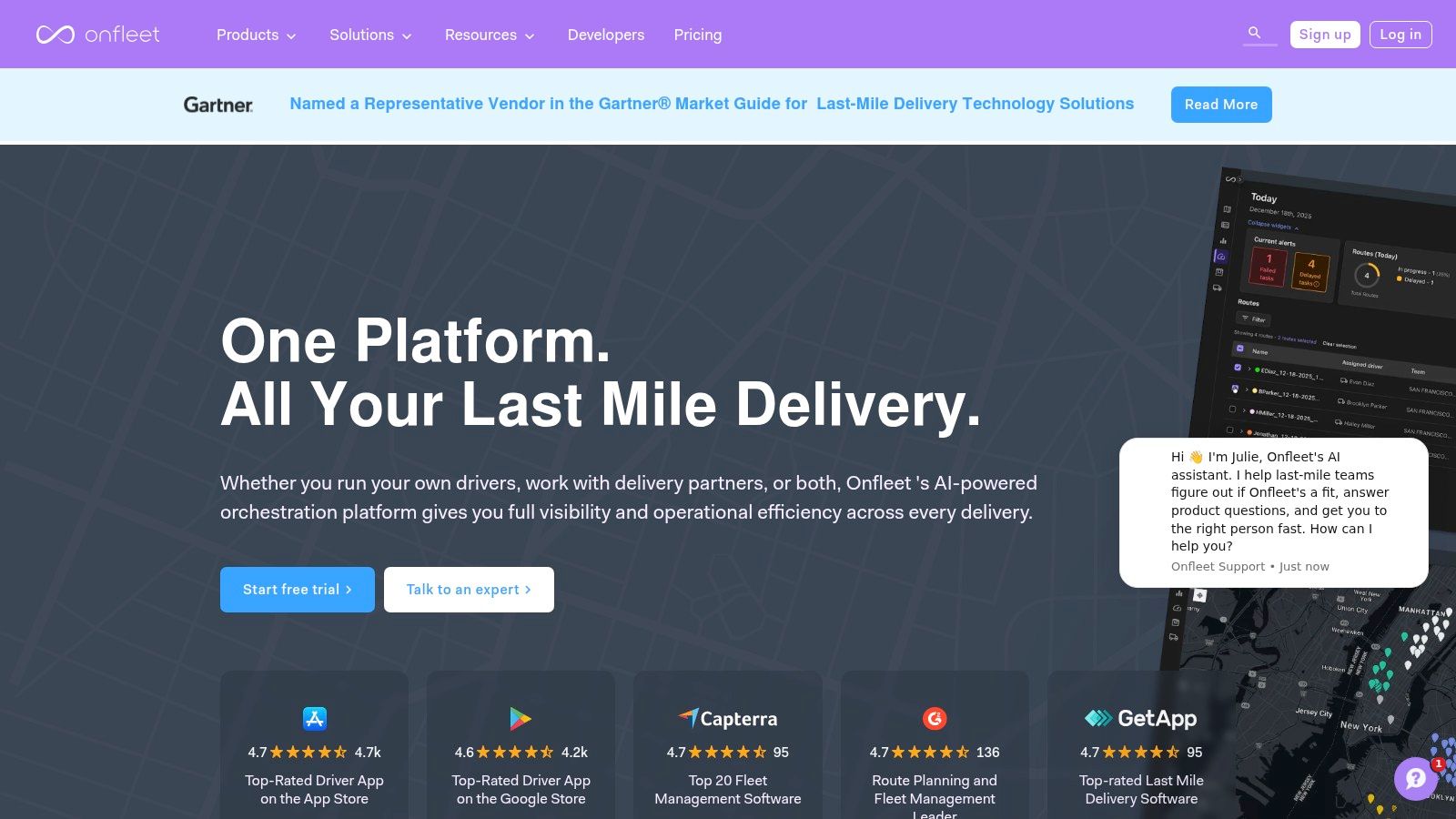
Onfleet is a polished choice for midsize and enterprise last-mile operations where dispatch quality, driver tracking, customer communication, and API access matter as much as route sequencing. It combines a dispatcher dashboard with live driver maps, ETA visibility, proof of delivery, analytics, and customer notifications.
The delivery record can include photos, signatures, and notes. Masked-number communication and telephony or SMS add-ons can help teams keep customer and driver conversations inside a managed workflow rather than exposing personal phone numbers.
Onfleet is especially attractive for DTC retailers, couriers, and operations where delivery status is part of the customer experience. The interface is designed for active dispatch, so teams can monitor progress and respond to exceptions rather than just sending a route to a driver.
The trade-off is commercial complexity. A smaller 1PL may find the platform more extensive than necessary, especially if it only needs spreadsheet intake, basic sequencing, and simple delivery confirmation. Add-ons for telephony or chat can also make the final cost harder to compare with a simpler all-in-one platform.
For a fuller comparison of planning workflows, see Routelink’s guide to route planning software. Onfleet is a strong candidate when customer-facing delivery communication and a mature API are central requirements, but request an itemized quote that separates core delivery tasks from communication and integration extras.
3. Routific
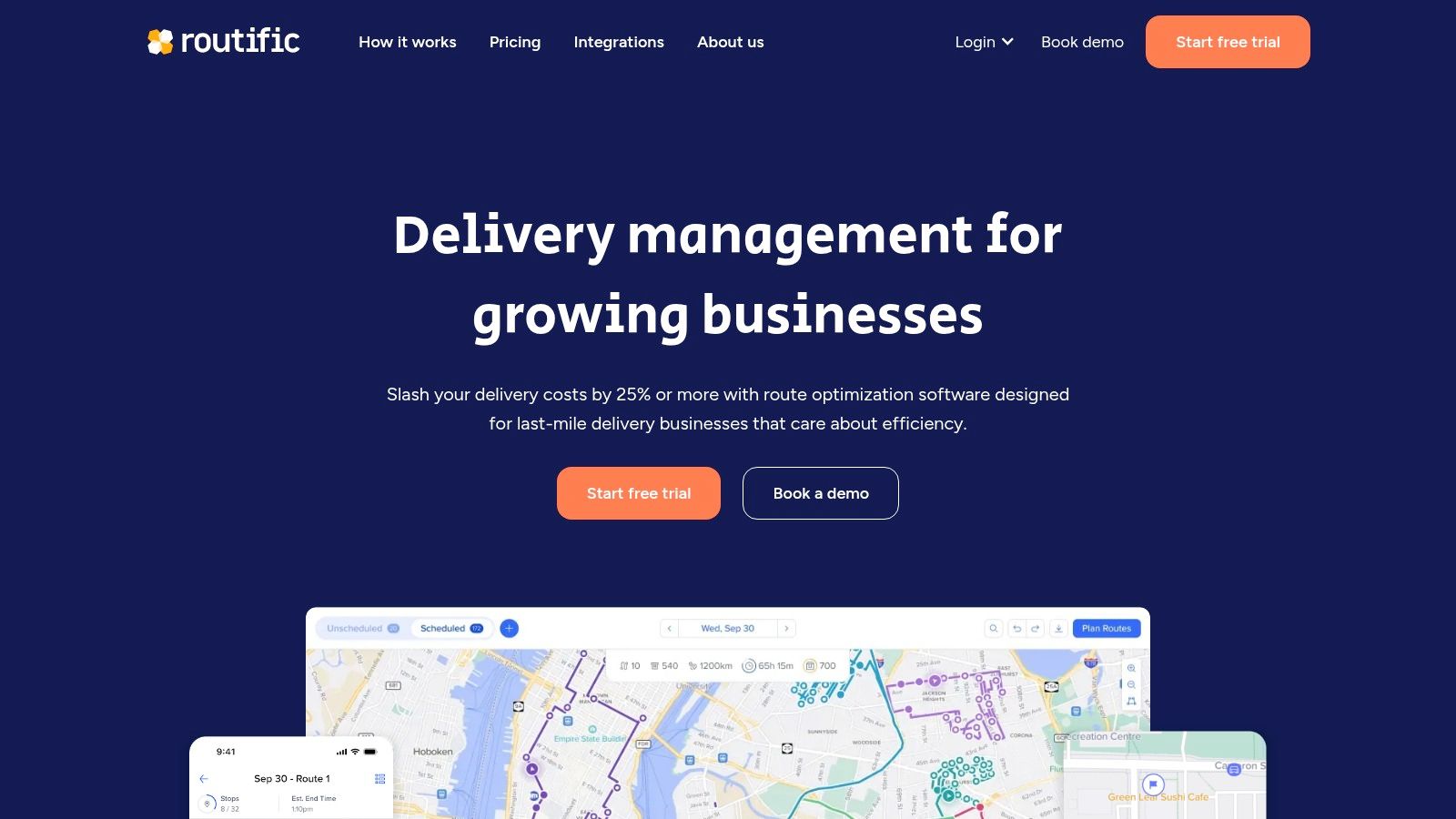
Routific fits small to midsize fleets with variable driver counts and consistent order-based delivery volume. Its per-order structure is useful when the fleet expands during busy periods because the business doesn’t need to pay for every occasional driver as a permanent seat.
The platform emphasizes quick planning and re-optimization. Dispatchers can build routes, monitor drivers through live GPS tracking, and collect proof of delivery with photos and signatures. Branded tracking and customer notifications give a smaller retailer or distributor a more professional delivery experience without building those functions internally.
Routific’s cost model is one of its main buying advantages. The plan notes include a free allowance for the first 100 orders per month and published tiers, so teams can model the subscription against order volume rather than guessing from a sales-led quote.
That model won’t suit every business. A retailer with a stable fleet but highly fluctuating order volume may appreciate it, while a large operation with extensive dispatch customization may want deeper enterprise controls. SMS is an add-on, and its API and webhook capabilities are lighter than those of some larger platforms.
The best test is a representative order day with address corrections, late orders, and a route change. Compare how quickly a dispatcher can re-plan and how clearly the driver sees the updated work. For teams researching the relationship between planning speed and execution, Routelink’s last-mile route optimization guide provides useful context.
4. OptimoRoute
OptimoRoute is a good match for scheduled deliveries, field service, recurring work, and operations that plan ahead. Its strength is the combination of automated planning, rich constraints, weekly scheduling, live tracking, customer tracking links, and driver status updates.
A scheduled heavy-delivery business, such as furniture, appliances, or building supplies, needs more than a short route between addresses. It may need appointment windows, driver hours, vehicle capacity, service duration, and return-to-depot logic. OptimoRoute is built around that type of planning problem and can handle large order sets without forcing the dispatcher to sequence every stop manually.
The pricing structure is clearer than a fully sales-led enterprise platform. Lite and Pro plans use per-driver pricing, while advanced scenarios and higher order counts move into a Custom tier. That creates a useful comparison point for a company deciding whether it values predictable driver-based billing or needs a more customized contract.
The main caution concerns commercial truck navigation, which is marked as beta in the supplied product information. A heavy-delivery team shouldn’t assume that general route optimization provides truck-legal navigation. Test vehicle restrictions, site access, route handoff, and driver instructions using the actual vehicles and delivery locations.
5. Route4Me
Route4Me is designed for organizations that want a modular platform with extensive configuration. It can serve an individual driver using a mobile route-planner app, but it also supports enterprise deployments with industry-specific modules, analytics, route accounting, and add-ons.
That range makes Route4Me relevant to complex 1PL operations, field teams, and businesses with unusual constraints. A company may start with route optimization and later add tools for territory management, reporting, or industry workflows. The modular approach is valuable when the operation doesn’t fit a simple delivery template.
The same flexibility creates implementation risk. A small team may spend more time deciding which modules it needs, configuring them, and training users than it would with a focused browser-based tool. Business and enterprise pricing is sales-led, so a headline quote may not reveal the cost of the complete operating workflow.
Route4Me is worth shortlisting when vehicle-specific constraints, territory rules, route accounting, or future customization are more important than immediate simplicity. During a trial, ask the vendor to configure one real workflow rather than showing a generic dashboard. The quality of that exercise will expose whether the platform is adaptable or merely broad.
6. WorkWave Route Manager
WorkWave Route Manager suits distribution, service, retail, and mature fleet operations that value guided implementation. It combines route planning, optimization, dispatch, live tracking, driver workflow, proof of delivery, telematics integrations, and professional services.
This is a sensible option for a business that doesn’t want to assemble its own implementation plan. WorkWave’s professional-services depth can help when the project includes recurring routes, multiple operating locations, integrations, driver training, and process redesign. That support can matter more than an extra planning feature when the business has limited internal technical capacity.
The trade-off is weight. A very small retailer may find an enterprise-oriented deployment excessive if its immediate need is to import stops, optimize routes, and share instructions. Public list pricing isn’t available, so the buying process requires a sales quote and a careful review of implementation services, integrations, and ongoing support.
WorkWave is strongest for a company that sees routing as part of a broader fleet transformation. It may be less attractive for a seasonal operation that needs to onboard subcontractors immediately with minimal device or training requirements.
7. Samsara
Samsara is the best fit in this list for a telematics-led fleet. Its routing and Route Execution capabilities connect commercial navigation with vehicle data, safety cameras, compliance workflows, and broader connected-operations management.
That combination matters for trucking and mixed fleets where a route can’t be separated from the vehicle. Dispatchers may need commercial navigation, while managers also care about safety, compliance, vehicle activity, and live operational data. Samsara brings those concerns into one hardware and software environment.
Samsara also provides APIs for retrieving routes and connecting workflows. That makes it more relevant to teams with an existing fleet-management program than to a small retailer choosing its first route planner.
The downside is the commercial model. Pricing is quote-based and sales-led, and contracts or bundles may feel rigid for a small organization. A buyer should separate the cost of routing from cameras, telematics hardware, compliance features, implementation, and contract commitments.
Samsara isn’t the obvious choice for a lightweight local delivery operation. It becomes compelling when vehicle intelligence and safety data are part of the business case, not optional extras.
8. Track-POD
Track-POD stands out for proof of delivery, making it a practical option for distributors, scheduled delivery teams, and businesses that need detailed completion evidence. Its workflow combines optimized routing, dispatch, live driver tracking, customer notifications, branded tracking links, and a driver app.
Proof of delivery can include photos, signatures, and barcode scanning. That gives operations teams a stronger record than a simple completed status, especially when they need to demonstrate what was delivered, document the condition of goods, or investigate a failed stop.
Track-POD offers both per-driver and per-order pricing models. That flexibility can help a business compare the software with its actual operating model. A stable fleet may prefer seat-based pricing, while a business with seasonal capacity may find order-based billing easier to align with demand.
Some advanced features are reserved for higher tiers, and external pricing calculators or minimum driver requirements can complicate the initial quote. Ask for a complete price based on the exact POD fields, notifications, integrations, and users required. For teams comparing delivery evidence in detail, Routelink’s proof of delivery software guide offers a useful benchmark for the workflow questions to ask.
9. Verizon Connect Reveal
Verizon Connect Reveal makes the most sense for businesses already invested in fleet tracking, electronic logging, vehicle data, and commercial navigation. Its route planning and dynamic multi-stop optimization sit alongside truck-aware navigation, mobile apps, route replay, and broader fleet-management capabilities.
The platform’s advantage is integration between routing and telemetry. A fleet manager doesn’t have to treat the planned route, actual vehicle movement, and driver or safety data as separate systems. That is particularly useful for trucking, regulated fleets, and mixed vehicle operations where route restrictions and operational records matter.
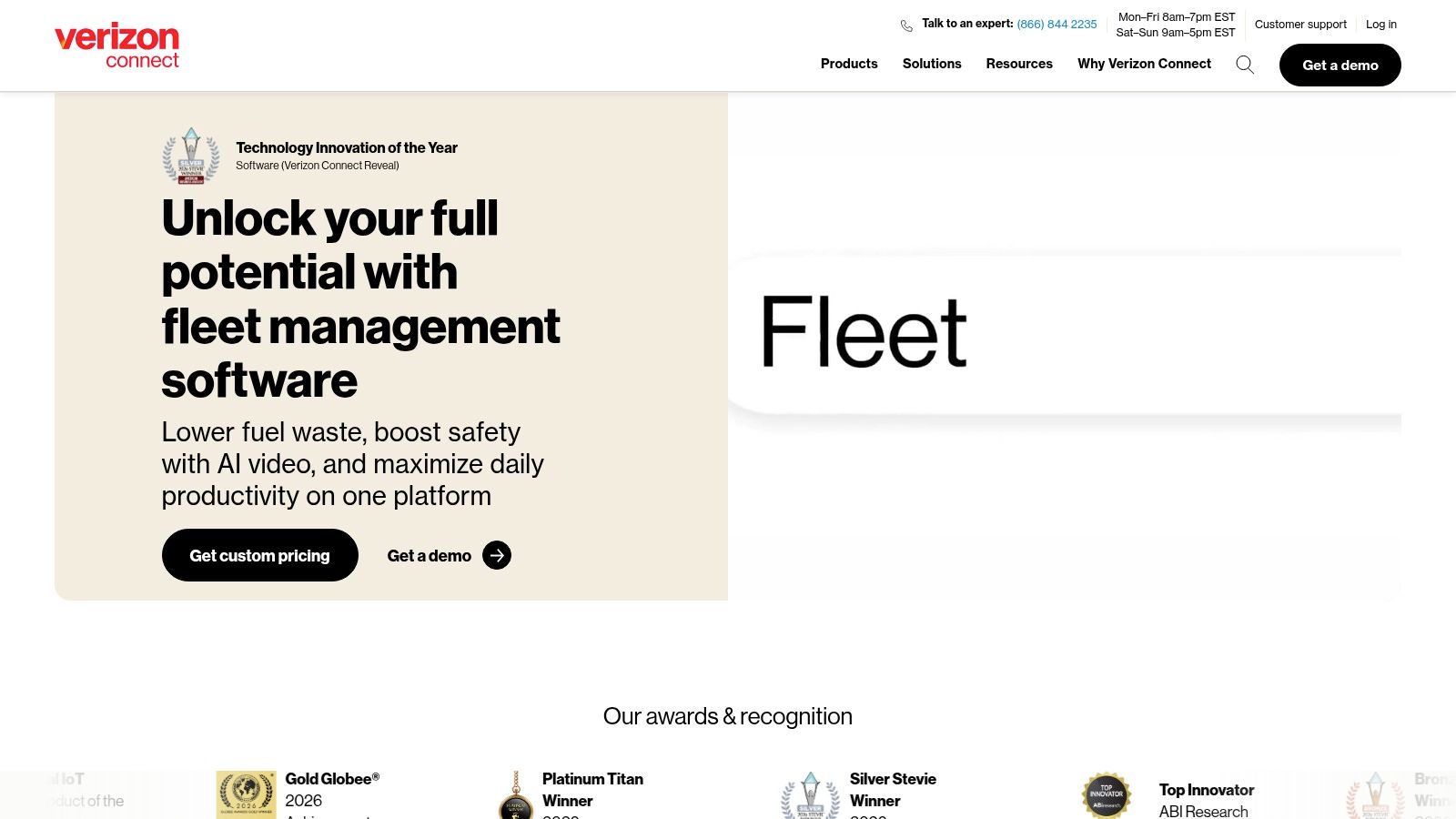
It isn’t as compelling for a retailer that only needs a local delivery board and browser-based driver links. The ecosystem can introduce more configuration, more account management, and more cost layers. Pricing isn’t published, and add-ons generally require contact with an account representative.
The buying question is simple. If the business already uses Verizon Connect, native routing may reduce fragmentation. If it doesn’t, compare the full platform commitment against a dedicated delivery system before assuming that connected fleet functionality is worth the added implementation effort.
10. Tookan
Tookan is a flexible choice for multi-merchant workflows, marketplaces, and operations that manage tasks across several brands or service providers. Its task-based plans include unlimited agents, GPS tracking, auto-assignment, proof of delivery, and API access on paid tiers.
That structure is useful when the business thinks in tasks rather than fixed delivery routes. A marketplace can assign work to different agents, manage merchant-specific operations, and use a shared dispatch layer without requiring every participant to operate a traditional fleet model.
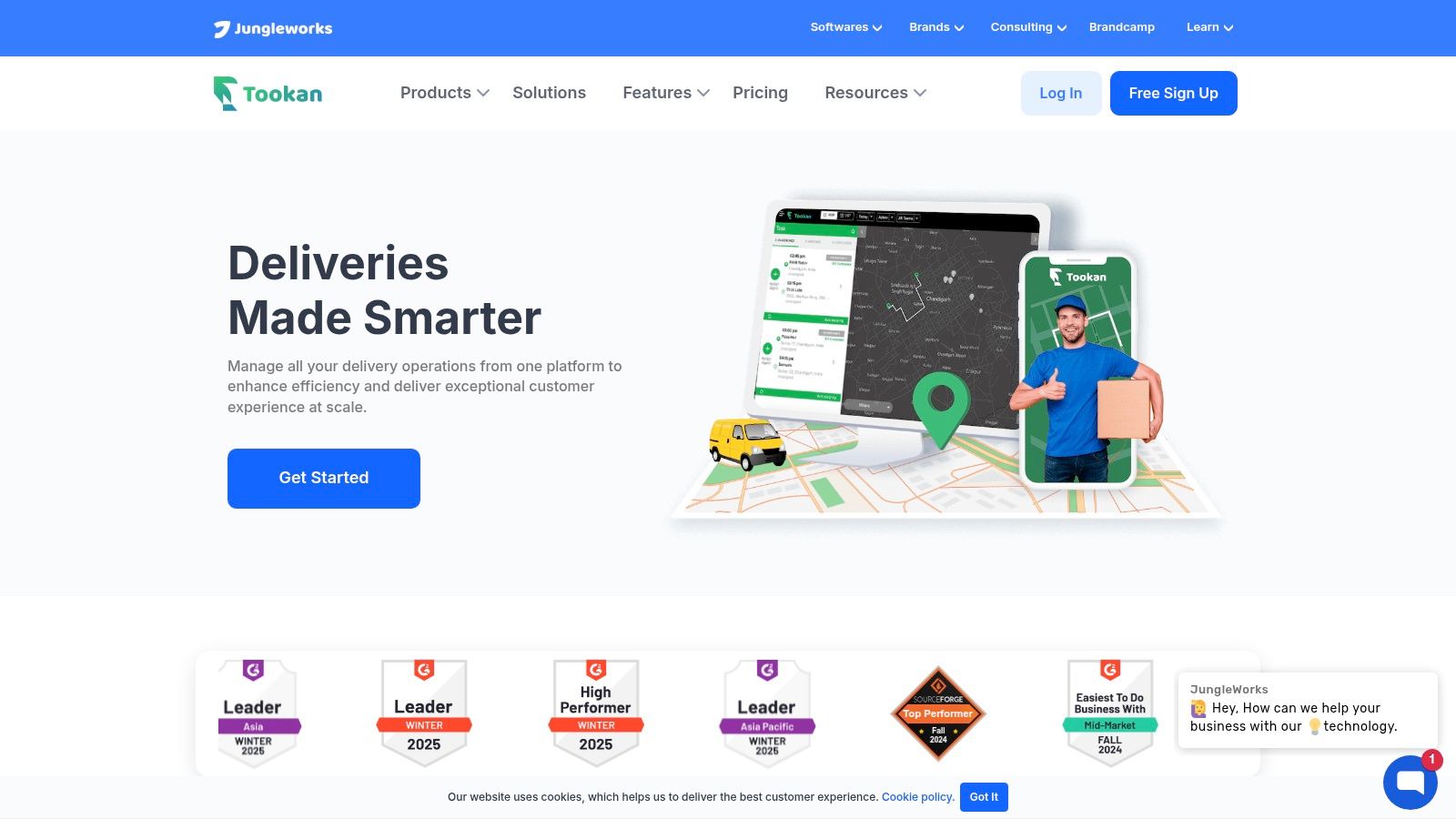
The important limitation is that route optimization isn’t included by default. It is available as an optional extension, so the attractive entry structure may not represent the final cost for a route-intensive workflow. Add-ons can also accumulate when the operation needs advanced notifications, integrations, or specialized execution features.
Tookan should be evaluated as a configurable task-management platform first and a route optimizer second. It can work well for multi-merchant dispatch, but a business that needs advanced multi-depot planning, vehicle capacity controls, or recurring route templates should test those functions rather than infer them from the task model.
Top 10 Route Mapping Software Comparison
| Product | Core features | Quality ★ | Unique strengths ✨ | Target audience 👥 | Pricing 💰 |
|---|---|---|---|---|---|
| Routelink 🏆 | Intake → plan → optimize → dispatch → tracking → analytics; CSV/shopify imports, geocoding, multi‑depot, PIN driver links | ★★★★☆ | ✨PIN‑protected browser driver links; rapid subcontractor onboarding; capacity & overload warnings; geo‑failure flags | 👥 Retailers, distributors, multi‑depot & subcontracted delivery fleets | 💰Free trial; Business tier (contact for quote) |
| Onfleet | Dispatch, real‑time ETAs, live driver map, POD, notifications, API | ★★★★★ | ✨Polished dispatcher & mobile UX; strong API and telephony add‑ons | 👥 Midsize → enterprise last‑mile teams | 💰Higher‑priced; add‑ons via quote |
| Routific | Route optimization, live tracking, POD, branded tracker, quick re‑optimize | ★★★★☆ | ✨Per‑order billing (free 100/mo); very fast re‑planning | 👥 Small → mid fleets with variable drivers | 💰Per‑order tiers; predictable for variable drivers |
| OptimoRoute | Fast optimizer, weekly planning, driver app, live ETAs, analytics | ★★★★☆ | ✨Scales to large stop counts; blended delivery & field‑service workflows | 👥 Delivery & field‑service teams | 💰Per‑driver tiers (Lite/Pro/Custom) |
| Route4Me | Powerful optimizer, mobile route‑planner app, analytics, add‑ons | ★★★★☆ | ✨Highly extensible via modular add‑ons; industry modules | 👥 SMBs to enterprise, solo drivers to complex fleets | 💰Free/paid tiers; enterprise quotes |
| WorkWave Route Manager | Route planning & optimization, dispatch, POD, telematics, professional services | ★★★★☆ | ✨Guided white‑glove implementation; routing engine options | 👥 Distribution, service & retail fleets needing support | 💰Sales‑led quotes |
| Samsara (Routing) | Commercial navigation, route execution, telematics & safety integration, APIs | ★★★★☆ | ✨Tight telematics + camera + routing integration for compliance | 👥 Trucking & mixed fleets needing telematics | 💰Quote‑based; bundled contracts |
| Track‑POD | Routing, driver app, advanced POD (photos, signatures, barcode), tracking | ★★★★☆ | ✨Barcode scanning & advanced POD suite; flexible billing models | 👥 SMEs needing strong POD & tracking | 💰Per‑driver or per‑order bundles |
| Verizon Connect Reveal | Fleet telematics, commercial navigation, dynamic multi‑stop optimization, apps | ★★★★☆ | ✨Enterprise telemetry + truck‑aware navigation | 👥 Enterprises using Verizon telematics & safety | 💰Sales‑led pricing; add‑ons vary |
| Tookan (Jungleworks) | Task/agent management, driver apps, POD, GPS, optional route optimization | ★★★★☆ | ✨Unlimited agent task bundles; multi‑merchant/marketplace friendly | 👥 Marketplaces, multi‑merchant platforms & task‑heavy ops | 💰Simple task bundles; optimization as add‑on |
Turn the Shortlist Into a Controlled Trial
The right selection process starts with your operating model. Document whether you run a 1PL fleet, coordinate subcontractors, serve DTC customers, deliver heavy goods on schedules, operate commercial vehicles, or dispatch tasks across multiple merchants. Those distinctions determine whether you need browser links, truck-aware navigation, appointment constraints, telematics, barcode evidence, or multi-brand controls.
Write down the actual workflow before requesting prices. Include daily stops, depots, vehicle types, capacity rules, order sources, address quality, proof-of-delivery requirements, customer notifications, driver connectivity, and the people who will dispatch and receive reports. A route planner that looks inexpensive before add-ons may become a different product once API access, SMS, telematics, or advanced POD is included.
The category is mature enough that buyers should evaluate execution, not just optimization. One independent market outlook estimated the global category at USD 6,356.2 million in 2023 and projected USD 16,019.8 million by 2030, while another forecast placed it at USD 12.3 billion in 2025 and USD 40.0 billion by 2034, as summarized by Grand View Research’s global market outlook. The exact estimates differ, but both point to sustained demand for systems that support more than map-based sequencing.
Use the same evidence pack with every finalist:
- Representative order file: Include normal stops, incomplete addresses, repeated customers, time windows, and the most common order fields.
- Real vehicle rules: Add capacity, depot assignments, driver shifts, restricted vehicles, and any heavy-delivery access requirements.
- Execution scenario: Include a late order, cancellation, failed delivery, driver change, and route edit after dispatch.
- Customer workflow: Test ETA notifications, branded tracking, delivery status, and the exact proof customers or internal teams require.
- Commercial quote: Ask for licenses, orders or stops, drivers, SMS, API access, integrations, implementation, support, and contract terms as separate lines.
Then run the same representative delivery day in two or three finalists. Don’t let each vendor choose a simple demonstration dataset. The difficult addresses and exceptions are where route quality, data handling, and dispatcher usability become visible.
Measure planning time, address corrections, route edits, exception handling, driver adoption, completion evidence, customer visibility, and post-run reporting. For each tool, record how many manual steps remain between order intake and dispatch. Also note whether a driver needs an app installation, whether the workflow works on the available devices, and whether the team can recover when connectivity is weak.
Independent review data gives buyers another reason to avoid generic satisfaction scores. G2 reported an average category rating of 4.48 out of 5 in September 2026, with sub-scores including 9.5 out of 10 for business partnership, 9.2 out of 10 for Master Routing, and 9.1 out of 10 for Productivity in its route-planning software category. The useful lesson isn’t that one score proves a purchase. It’s that operational fit, routing capability, and productivity deserve separate evaluation.
A 2026 buyer-guide benchmark also distinguishes basic routing from execution-layer capability. It evaluates platforms on scalability to 500 or more vehicles, AI optimization, real-time rerouting, dispatch management, and supply-chain visibility, while characterizing some SMB tools as limited on live rerouting and dispatch in comparison with enterprise systems, according to Locus’s routing and scheduling software comparison. A small retailer shouldn’t pay for enterprise complexity automatically, but a large multi-depot operation shouldn’t mistake a simple route sequencer for a complete dispatch system.
Routelink is the clearest recommendation for teams prioritizing a unified local-delivery workflow, multi-depot planning, capacity visibility, spreadsheet or ecommerce intake, customer tracking, and fast browser-based driver rollout. OptimoRoute and Track-POD deserve attention for scheduled work and detailed delivery evidence. Routific is attractive for variable driver counts and order-led billing. Samsara and Verizon Connect are better aligned with telematics-heavy fleets, while Route4Me and WorkWave fit organizations that accept more configuration and implementation effort. Tookan is the logical specialist for task-based, multi-merchant workflows.
Choose the platform that matches how your deliveries are run today, then confirm that it can support the next operational change without forcing a second system. A controlled trial with comparable pricing will expose that answer faster than a feature checklist.
Routelink unifies order intake, route optimization, multi-depot dispatch, browser-based driver links, live tracking, customer notifications, proof of delivery, and post-run analytics for local delivery teams. If you want to test that workflow against your own delivery day, visit Routelink and start with a representative route file.