How to Start a Cargo Van Business in 2026
Learn how to start and scale a profitable cargo van business. Covers startup costs, route economics, permits, pricing, driver management, and growth tactics.

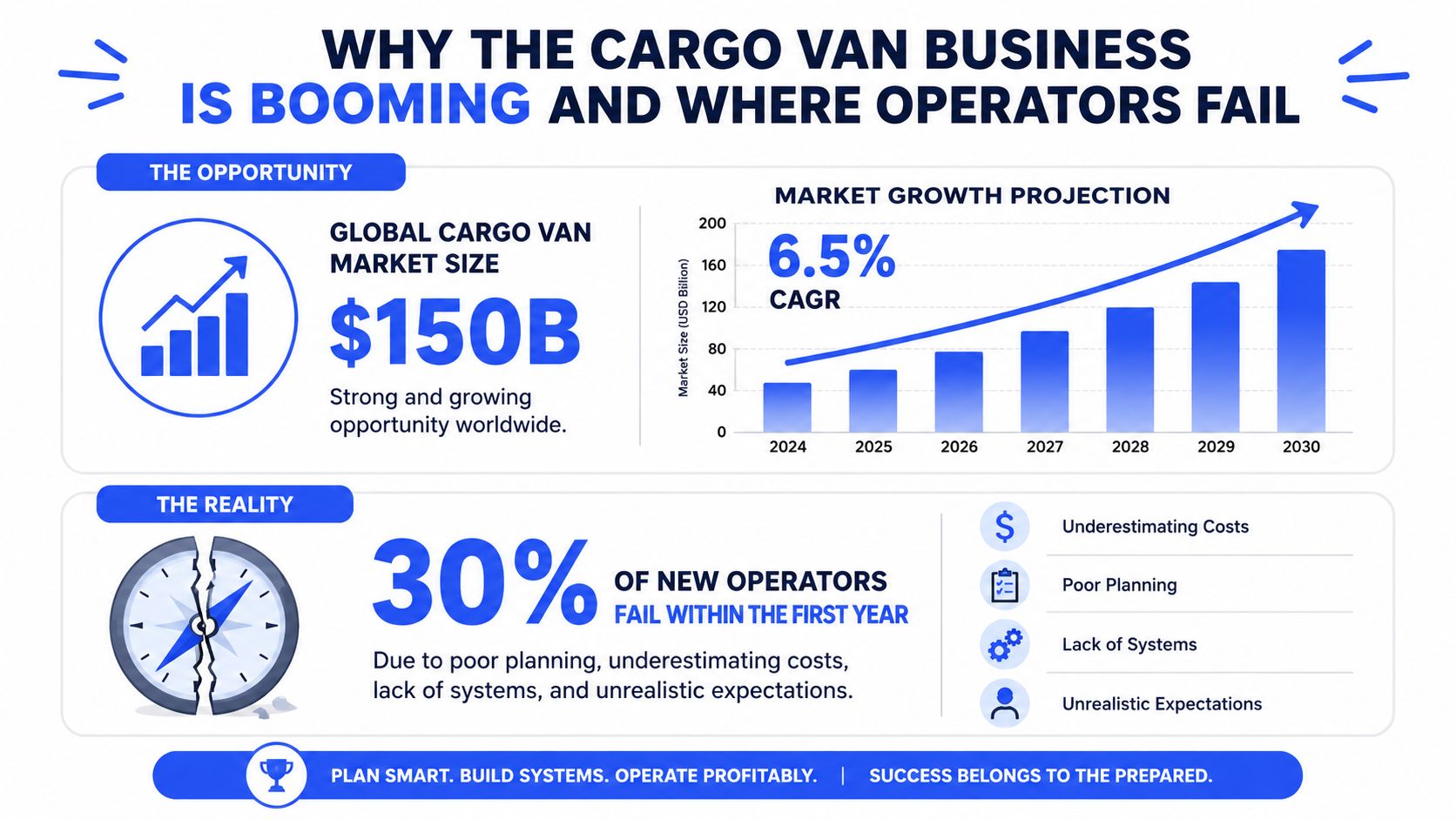
The cargo van market is already substantial in 2024, with steady growth projected over the coming years. That scale matters because this isn’t a side hustle market anymore, it’s a large commercial segment shaped by urban logistics, last-mile delivery, and recurring route work.
What surprises most new operators is that the threat isn’t demand, it’s survival. Industry sources report that a high proportion of new trucking and owner-operator businesses fail within the first few years, usually because owners run out of cash, underestimate operating costs, or never build a maintenance reserve. A cargo van business can work, but only if you treat route economics like a discipline, not a guess.
Table of Contents
- Why the Cargo Van Business Is Booming and Where Operators Fail
- Choosing Your Delivery Business Model
- Startup Costs and Route Economics That Actually Matter
- Building Your Daily Operations Workflow
- Permits, Insurance, and Capital Planning for Survival
- Scaling Your Fleet and Growing Revenue
Why the Cargo Van Business Is Booming and Where Operators Fail
The money is in the middle of the supply chain. Cargo vans keep urban freight, local service work, and retail distribution moving, which is why analysts keep projecting steady growth in the category.
That range across forecasts is useful. Cargo vans are a broad commercial tool, not a narrow niche, and they show up in delivery, service calls, and retail distribution because they fit dense routes and smaller loads better than larger equipment. Analysts at Research and Markets also say the U.S. accounted for over 85% of revenue share in 2024 in the cargo vans market, which shows how concentrated van-based commercial activity still is in North America.
The growth story is not the same as the survival story
The failure data is the part many skip. Multiple industry sources report that a high proportion of new trucking and owner-operator businesses fail within the first few years, and the reasons repeat: cash-flow shortfalls, underestimated operating costs, and too little money set aside for repairs. Buying a van is the easy part.
A cargo van business falls apart when owners confuse gross revenue with usable cash. A route can look busy and still drain the business if the van sits for repairs, deadhead miles eat into margin, or payment terms push collections past weekly expenses. The operators who last usually ask, “What survives a slow week?” before they ask, “What can I bill on a good week?”
Practical rule: if you cannot explain how the business survives one bad repair month, you do not have a business model yet.
Start with the route, the margin, and the cash buffer. The van comes after that. The businesses that make it through year three are usually the ones that treated cost-per-mile discipline as a survival habit from the start.
Choosing Your Delivery Business Model
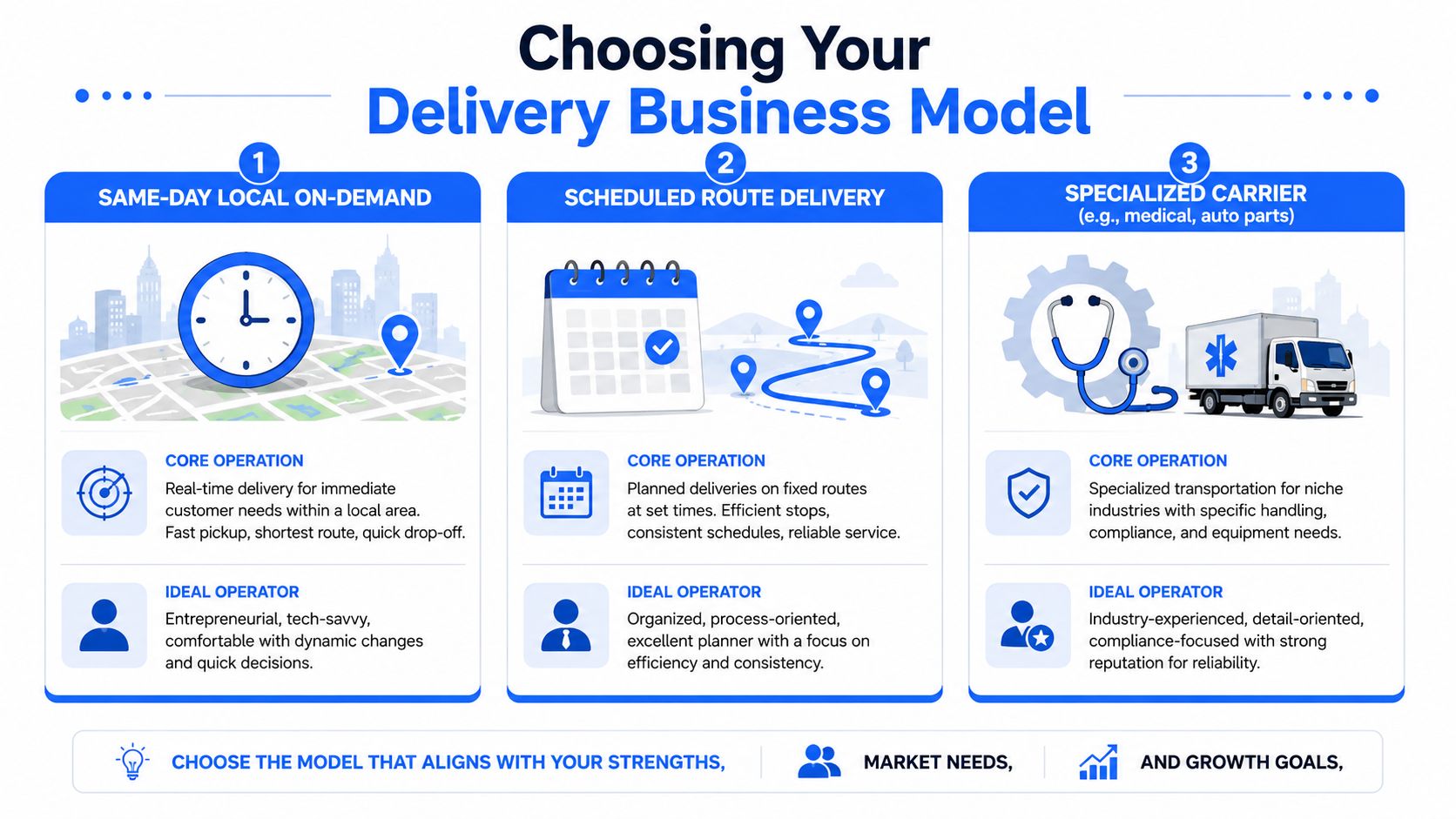
The right cargo van business model depends on how steady you need cash to be and how much operational chaos you can handle. A solo operator with limited capital usually needs predictable work first. Someone building a fleet can afford more volatility if the margins and volume justify it.
Same-day work gets moving fast, but it swings hard
Same-day and local on-demand delivery is the easiest model to understand. You take urgent jobs, you move quickly, and you get paid for responsiveness. That can fill a calendar fast, but it also means the phone drives your schedule, not the other way around.
This model fits operators who are comfortable living with inconsistent volume. It works well for last-mile retail deliveries, urgent parts runs, and overflow work from local businesses. The downside is that every empty mile hurts, and every late pickup can cost the next job.
Scheduled routes pay better in consistency than in drama
Recurring pickup and delivery routes are usually the strongest place to build a durable business. You’re not chasing every individual load, you’re serving the same accounts on a fixed cadence, so forecasting gets easier and cash flow gets cleaner. Medical courier work and local B2B distribution often belong here because the customer values reliability more than speed alone.
The trade-off is that these routes take relationship work. You need contract discipline, clean service, and enough professionalism that the client trusts you with repeat freight. If you can win this work, the business becomes easier to manage because the schedule stops changing every hour.
Specialized delivery pays for precision
White-glove and specialized delivery can command stronger pricing because the work requires more care. Think fragile goods, medical items, auto parts, or deliveries that need room placement, signatures, or careful handling. The van itself matters less than the operator’s process.
Some operators chase the highest-paying job and ignore the cost of special handling. That usually creates more labor, more liability, and more mistakes than the margin can support.
If you’re solo and just starting, scheduled local work is usually the safest foundation. If you already have dispatch discipline and a reliable driver bench, specialized delivery can become a useful premium lane. Same-day work is fine as a feeder stream, but it’s a rough place to build the whole business unless you already have strong demand.
Startup Costs and Route Economics That Actually Matter
The worst mistake in the cargo van business is shopping for a van before understanding route economics. A vehicle is only an asset if the work it carries pays more than the full cost of running it. That means fuel, insurance, maintenance, tires, downtime, and the miles you drive without a paying load.
Build the business on cost per mile
The most important habit is calculating cost per mile before you buy capacity. Owner-operator analysis shows average operating cost reached $2.26 per mile in 2024, with non-fuel operating costs at $1.779 per mile (A to B). That’s why a route that pays only a little above cost can still lose money once you add deadhead miles and repair spikes.
Route economics first: if the contract rate can’t clear your actual loaded-mile cost after empty miles are counted, adding another van just scales the loss.
For startup planning, use a simple structure. Estimate the van payment or lease, insurance, fuel, maintenance reserve, and basic software or communications tools. Then compare that total against what a route pays per mile and per stop. If the work doesn’t leave room for down weeks, it’s not a route you should scale.
| Cargo Van Business Startup Cost Breakdown | Low Estimate | High Estimate | Notes |
|---|---|---|---|
| Van purchase or lease | Varies by vehicle and terms | Varies by vehicle and terms | Biggest capital decision, and the wrong unit can trap cash |
| Insurance | Varies by carrier and risk | Varies by carrier and risk | Commercial coverage needs to match the work |
| Permits and licenses | Varies by market | Varies by market | Depends on operating area and authority requirements |
| Fuel | Varies by route density | Varies by route density | Route length and empty miles matter more than rough estimates |
| Maintenance reserve | Varies by usage | Varies by usage | This is what keeps a repair from becoming a crisis |
| Technology | Varies by platform | Varies by platform | Dispatch, tracking, and proof of delivery all belong here |
Choose work that creates forecastable cash
Recurring local B2B work, medical courier routes, and repeat pickups usually beat spot work because they reduce volatility. Spot jobs can look attractive, but they often come with messy timing, unplanned deadhead, and weak bargaining power when you need payment discipline. Dedicated routes let you forecast weekly cash with much more confidence.
A practical filter is this, ask whether the route supports a repair reserve and a bad-week buffer after fuel and fixed costs. If the answer is no, the volume doesn’t matter. A full schedule that doesn’t clear real operating cost is just a busier way to lose money.
For a useful route evaluation framework, I’d also look at route planning basics for delivery drivers. The right route structure matters just as much as the customer you’re serving.
Building Your Daily Operations Workflow
A cargo van business bleeds money fast when dispatch lives in text messages, route changes live in someone’s head, and proof of delivery sits in random photos. Daily operations have to be simple enough for one operator and tight enough for a small team, because thin margins disappear when stops are missed, miles are wasted, or a driver waits around unpaid. Capture, plan, dispatch, notify, deliver.
Capture jobs cleanly before the day starts
Orders need one intake path. That can be an e-commerce integration, an ERP connection, or a CSV upload if the customer sends jobs in batches. The goal is to get every stop into one place with the right address, delivery window, service note, and any stop-specific instructions before anyone leaves the yard.
Planning comes next. Intelligent route planning should assign stops based on delivery windows, vehicle capacity, and route order, while still letting a dispatcher adjust manually when reality changes. That is the difference between a route that looks efficient on paper and one that holds up in traffic and keeps cost per mile under control.
Dispatch without friction
Drivers should get the route without a clunky setup process. PIN-protected links and mobile web access are easier than forcing every subcontractor to download a separate app, especially during peak periods or temporary coverage gaps. That matters when you need to add capacity quickly without turning onboarding into an administrative bottleneck. For operators building a bench of backup drivers, a guide to hiring delivery drivers helps keep that process practical.
Customer communication should be automatic, not improvised. Branded tracking, email updates, SMS, and WhatsApp cut the “where is my delivery” calls that eat the day and distract the dispatcher from the next route. If the customer can see movement, you spend less time babysitting status updates and more time protecting margins.
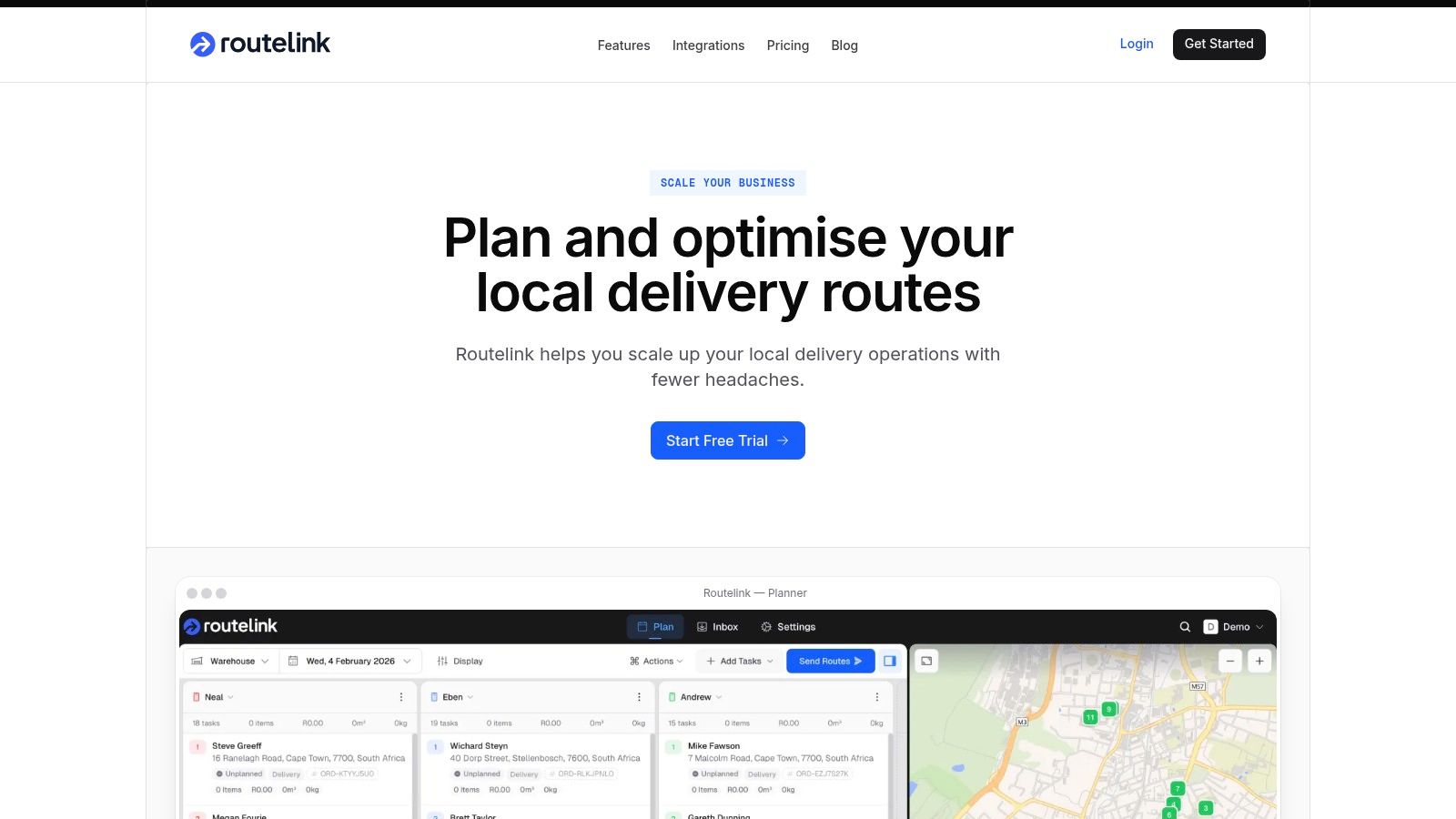
A unified platform like Routelink fits this kind of 1PL operation because it links planning, dispatch, tracking, and proof of delivery in one place. I’d use it as one option for operators who want fewer moving parts rather than stitching together separate systems. More detail on that kind of workflow is here, last-mile delivery software for local operators.
Close every stop with proof
Proof of delivery should include signatures and photos when the job calls for it. That reduces disputes, weakens chargeback claims, and gives you a clean record if a customer questions a drop later. Keep the workflow boring and repeatable, because boring is profitable in delivery.
Permits, Insurance, and Capital Planning for Survival
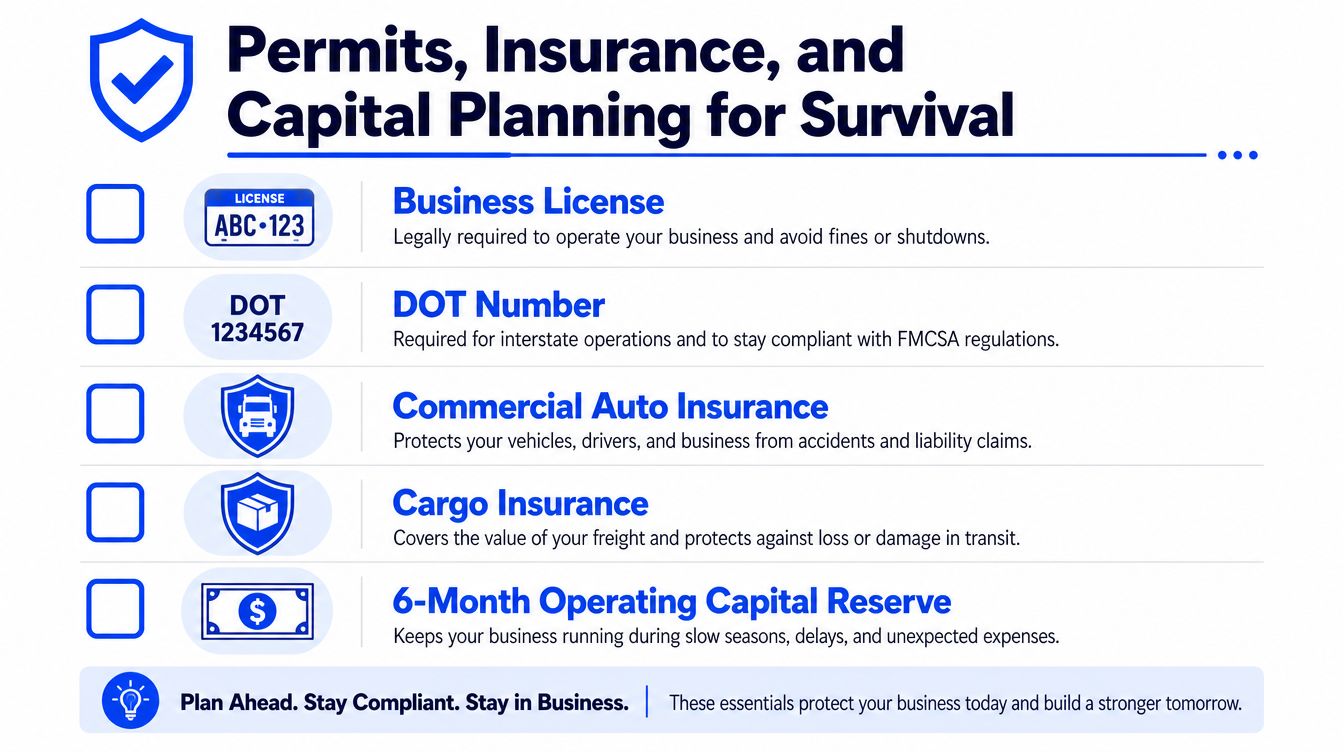
A cargo van business needs legal and financial structure before it needs scale. The exact permit stack varies by operation, but most operators end up dealing with a business license, DOT-related registration or authority requirements when applicable, and the insurance setup that matches the freight they carry. If the work touches regulated lanes or interstate activity, this part needs to be handled correctly before the first route runs.
Buy protection for the vehicle and the load
Commercial auto insurance is the foundation because the van is the business. Cargo insurance protects the goods being moved, and general liability covers the broader risk of customer claims and on-site mishaps. The right policy mix depends on whether you’re handling local delivery, medical work, or specialized freight, but skipping coverage to save cash usually creates the kind of problem that ends a young business.
Capital planning matters just as much. Transportation and warehousing startups have roughly a 37% ten-year survival rate in the benchmark cited in the brief, which is a blunt reminder that the sector is unforgiving. The answer is not optimism. The answer is reserves, conservative borrowing, and contracts that pay in a way you can forecast.
Keep cash for repairs, not excuses
The operators who last usually keep a maintenance reserve and avoid putting the first vehicle on a payment structure that leaves no breathing room. A van that’s financed too tightly can turn one repair into a missed payroll or a late insurance bill. That’s how a busy month becomes a cash crisis.
Cash rule: if the business can’t survive a repair bill without borrowing again, the reserve is too thin and the vehicle is too expensive.
I’d rather see a new operator wait to add the second van than rush into it with weak gross margin. Add capacity only when the first unit stays busy, the route margin remains healthy after downtime, and the business can absorb a bad week without scrambling for outside cash. If your payment terms create receivables gaps, fix that before you grow.
Scaling Your Fleet and Growing Revenue
The jump from one van to a fleet looks glamorous from the outside and messy from the inside. Growth only works when the first unit already runs on repeatable routes, clean dispatch, and a reserve that keeps maintenance from hijacking cash flow. If the first van is still dependent on luck, a second one just doubles the chaos.
Add vehicles only after the first route is stable
A second van makes sense when the first one has consistent utilization, the margin survives real operating costs, and there’s enough work to keep both vehicles productive without cannibalizing the same loads. The brief’s operational benchmark for scale starts with enough revenue to support the next step, then a line of credit or small business loan, then driver onboarding and route software, and finally the second vehicle with a maintenance cadence that doesn’t depend on memory.
The growth lever that compounds best is recurring B2B work. Once you’ve got stable accounts, you can expand into adjacent service areas, add coverage windows, and use route data to identify underperforming lanes. That’s how operators turn one good route into a service map instead of chasing random jobs.
Build around metrics, not volume
The dashboard should stay tight. Track on-time delivery, cost per mile, revenue per loaded mile, and retention. If any one of those starts slipping, the business usually feels it before the bank account does. More vans won’t fix a weak route.
Driver management should stay simple too. Hire for reliability, then back them with clear dispatch instructions, customer notifications, and proof of delivery standards. If your team has to guess, your service level will wobble.
If you want to run local delivery like a real route business, Routelink gives you the capture, planning, dispatch, tracking, and proof-of-delivery workflow in one system. Visit Routelink to see how that fits a cargo van operation that needs cleaner routes and less manual coordination.