Starting a Box Truck Business: A Practical 2026 Roadmap — Routelink
A practical 2026 roadmap for starting a box truck business, covering costs, licensing, insurance, pricing, daily operations, and how to scale profitably.
31 August 2026 · Routelink Team
Starting a Box Truck Business: A Practical 2026 Roadmap
A practical 2026 roadmap for starting a box truck business, covering costs, licensing, insurance, pricing, daily operations, and how to scale profitably.
Many say to start a box truck business by finding a truck. That’s backwards. The actual starting line is surviving the first 6 to 12 months of insurance pricing, compliance, fuel advances, slow-paying customers, and the new-authority tax that drains beginners before the truck ever earns significant money.
If you can’t stay solvent through the first pricing mistakes, deadhead miles, and broker terms, the truck just becomes a very expensive problem. A used truck is a tool, not a strategy. The strategy is choosing a freight model that fits your market, then building the cash flow to support it.
Table of Contents
- The Starting Line Most Beginners Miss
- Picking a Freight Model and Lanes Before You Buy a Truck
- Startup Costs and the Cost Per Mile Math
- Licensing, Permits, and the Insurance Reality Check
- Day to Day Operations From Capture to Proof of Delivery
- Pricing, Customer Acquisition, and Hiring Versus Subcontracting
- Your First-Year Survival Checklist and Next Scaling Moves
The Starting Line Most Beginners Miss
Buying the truck feels like progress because you can see it. The actual work begins after the purchase, when the bills come due and the checks do not. That gap crushes a lot of first-year operators, especially when they fail to plan for insurance deposits, fuel advances, permit timing, and slow customer payments.
A practical startup benchmark is simple. Independent industry guides place used-truck startup packages around $30,000 to $60,000, while newer or more fully equipped setups often rise to $65,000 to $100,000+. Used 26-foot trucks in good condition are commonly cited at $20,000 to $45,000, and the operators who skip insurance, maintenance, permits, and downtime planning are the ones most likely to fail before break-even. That is not a truck-buying problem. It is a cash-flow problem, and it starts before the key ever turns in the ignition. The practical startup benchmark for box truck businesses
What First-Year Operators Miss Most
The money leak rarely looks dramatic. It looks like a few bad lanes, a truck sitting for repairs, a customer taking too long to pay, and a broker load that paid less than it should have because the empty return miles were not priced in.
Practical rule: if you cannot explain how each load covers fuel, insurance, maintenance, and deadhead, you are not running a business, you are gambling with a truck.
Month one sets the tone. The freight model you choose, the authority structure you use, and the lanes you accept all shape your survival curve. Chase spot freight without a lane strategy, and your first year becomes a pile of expensive lessons instead of a margin-building business.
Line up at least one contracted lane or recurring customer before you buy. Then model the business on cost per mile, not gross revenue. Revenue sounds impressive. Margin pays the bills.
Picking a Freight Model and Lanes Before You Buy a Truck
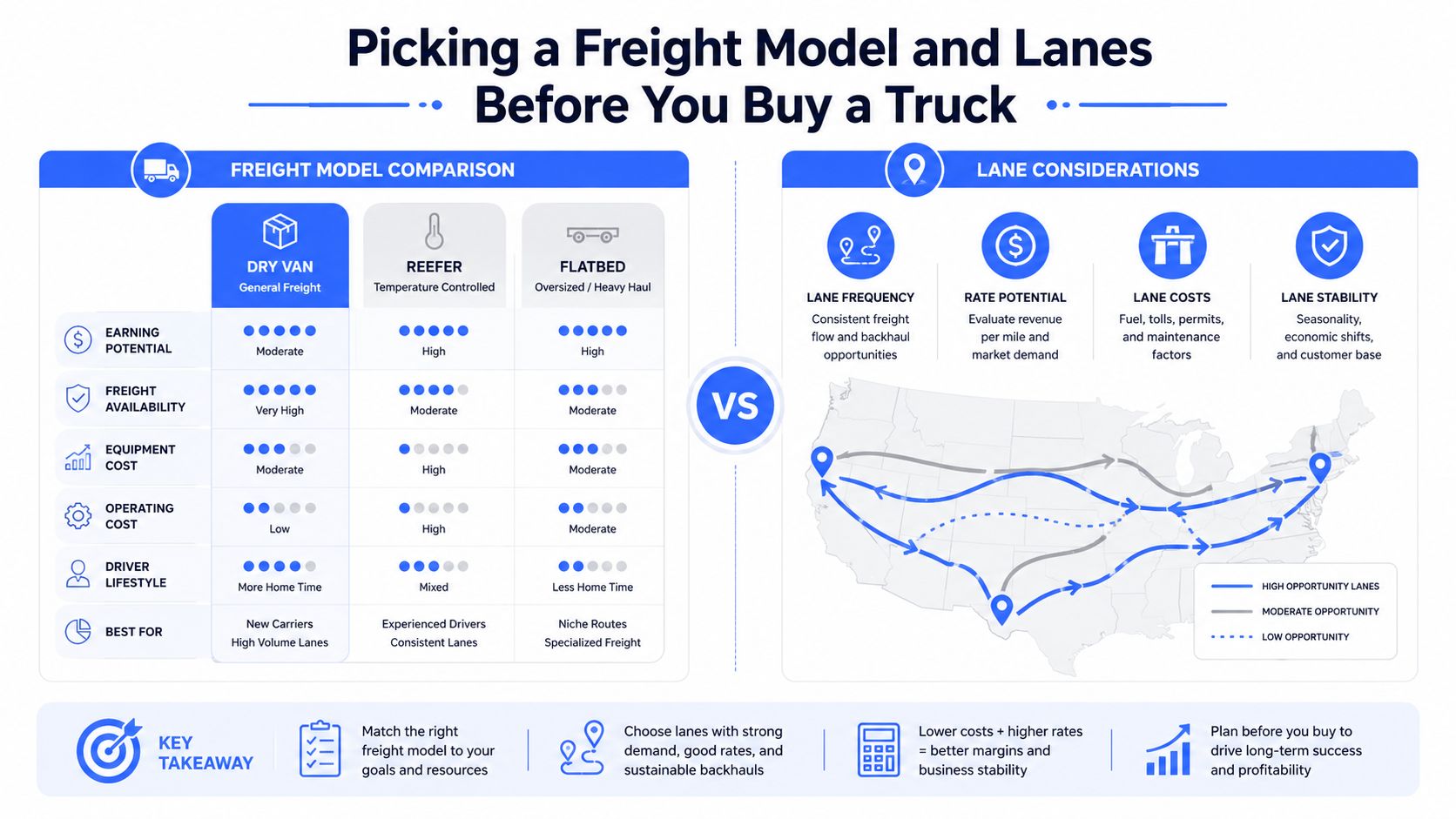
Start with the work, not the equipment. A box truck can do local cartage, regional linehaul, last-mile parcel, white-glove delivery, and dedicated contract work, but those are not interchangeable businesses. Each one changes your deadhead risk, dock requirements, customer concentration, and the kind of truck you should buy.
Pick the Freight Model First
Local cartage usually rewards discipline and consistency. You’re close to the customer, the radius is tighter, and you can often reduce empty miles. Regional linehaul can pay better on paper, but it punishes weak lane choice because every bad return leg eats your margin.
White-glove delivery and furniture work often need stronger customer service, liftgate planning, and more care at delivery. Dedicated contract work is boring in the best way, because repeat volume is easier to plan around. That’s the kind of freight most new operators should want.
Build the Lane List Before You Spend Money
Choose a 200-mile radius, then identify three shippers per lane. Don’t guess. Call them, email them, and ask what volume they move, what equipment they use, and whether they need recurring service or just overflow support.
Use backhaul density as your filter. If a lane looks busy going out but dead coming back, your gross rate can fool you into thinking the business is healthier than it is. That’s how beginners get trapped in low-value miles.
If you want route discipline while you evaluate lanes, a planning tool like route planning software can help you compare stops, delivery windows, and vehicle fit before you commit to a truck. That kind of planning work belongs before purchase, not after.
Don’t buy a truck because it’s available. Buy the truck that matches the freight you already know how to win.
Startup Costs and the Cost Per Mile Math
The fastest way to lose money in trucking is to focus on the monthly payment and ignore the full operating stack. A truck can be cheap and still be unaffordable if the lane is weak, the insurance is brutal, or the maintenance reserve is too thin.
If you want a useful overview of launch expenses, a solid external reference is the breakdown of costs of launching a trucking business. That said, the number that matters most is your floor rate per mile, because that’s where the survival math lives.
What Goes Into the First-Year Budget
One-time startup costs usually include the truck purchase or lease, insurance down payment, authority filings, branding, ELD, and safety equipment. Recurring costs include fuel, tires, maintenance reserve, insurance premiums, plate fees, and software. If you miss any one of those buckets, your projections will lie to you.
Here’s the blunt truth. A truck grossing $150,000 annually may only retain roughly $15,000 to $37,500 after operating expenses in a normal scenario, because well-run owner-operator box truck operations typically net about 10% to 25% of gross revenue. Many sources cluster around 10% to 15% as a healthier benchmark, while 25% to 35% is reserved for top performers with tight cost control. Owner-operator box truck profit and expense analysis
Sample First-Year Cost Comparison
| Cost Category | Owner-Operator Monthly | Leased-On Monthly |
|---|---|---|
| Truck payment or lease | Higher | Lower |
| Insurance | Higher | Lower |
| Fuel | Full responsibility | Full responsibility |
| Maintenance reserve | Full responsibility | Partial or shared depending on agreement |
| Plates and permits | Full responsibility | Often reduced burden |
| Dispatch or admin tools | Full responsibility | Often lower if carrier support exists |
| Cash-flow pressure | Heavy | Lighter |
A single 26-foot truck running 5,000 miles a month needs ruthless cost control. If your all-in cost per mile is too close to your revenue per mile, the business just becomes a noisy way to break even. A rate that looks fine after fuel can still be too low once insurance, maintenance, and deadhead are added.
Rule of thumb: if a load doesn’t cover your full cost per mile plus margin, it’s not a load, it’s a distraction.
If you track operations carefully, the math gets easier to see. In practice, the line between survival and silent bankruptcy is usually whether you can keep your rate above your true cost floor, not whether a load sounds busy.
Licensing, Permits, and the Insurance Reality Check
The legal line starts with GVWR 10,001 lb. That threshold changes how people classify the truck, how the work is regulated, and what kind of liability you may need depending on whether you haul interstate, hazardous freight, or operate under your own authority. The beginner mistake is thinking “non-CDL” means “less serious.” It doesn’t.
For interstate for-hire property hauling, FMCSA-related minimum liability is typically $750,000 for non-hazardous carriers at GVWR 10,001 lb or more. That number matters because brokers and shippers in major markets often care about what you can insure and contract, not just what the law technically allows. A key question is whether your freight model is contractable and insurable.
The Paperwork Most New Owners Miss
You’ll usually need a DOT number, operating authority if you’re hauling under your own authority, and the right state and multi-state registrations depending on where you run. Many new owners also forget UCR, IFTA, and intrastate PUC requirements, then wonder why they get stuck at the roadside or delayed on plates.
The sequence matters. Get the authority right first, file the insurance binder with FMCSA, then handle plates and IRP. If you reverse that order, you risk paying for equipment that can’t legally move the way you planned.
Insurance Is the New-Authority Tax
Beginners often face significant financial hurdles here. Recent independent coverage shows that in 2026, a fully covered single-truck operation can land roughly in the $5,400 to $11,900 per year range, while a new 26-foot box truck venture with fresh authority can face $14,400 to $31,000+ annually in insurance alone, especially in metro ZIP codes or with limited experience. Box truck insurance requirements for carriers
For cargo coverage guidance, use a specialist who understands freight exposure, like motor truck cargo insurance. Cargo limits vary by freight type, and financed trucks also expose you to physical damage costs you can’t ignore. If the truck is parked, non-trucking liability can still matter depending on how the vehicle is used and who controls it.
| Coverage | New Authority (Year 1) | Established (Year 3+) | Notes |
|---|---|---|---|
| Primary liability | Higher | Lower | New authority pricing usually reflects limited history |
| Cargo coverage | Higher | Lower | Freight type and claims history matter |
| Physical damage | Higher if financed | Lower | Loan terms and vehicle value drive exposure |
| Non-trucking liability | Often overlooked | More predictable | Important when the truck isn’t on dispatch |
| Overall annual insurance pressure | $14,400 to $31,000+ | Lower, more stable | New authority surcharge is the hidden hit |
A lot of people think they’re buying a truck. What they’re really buying is an insurance profile.
Day to Day Operations From Capture to Proof of Delivery
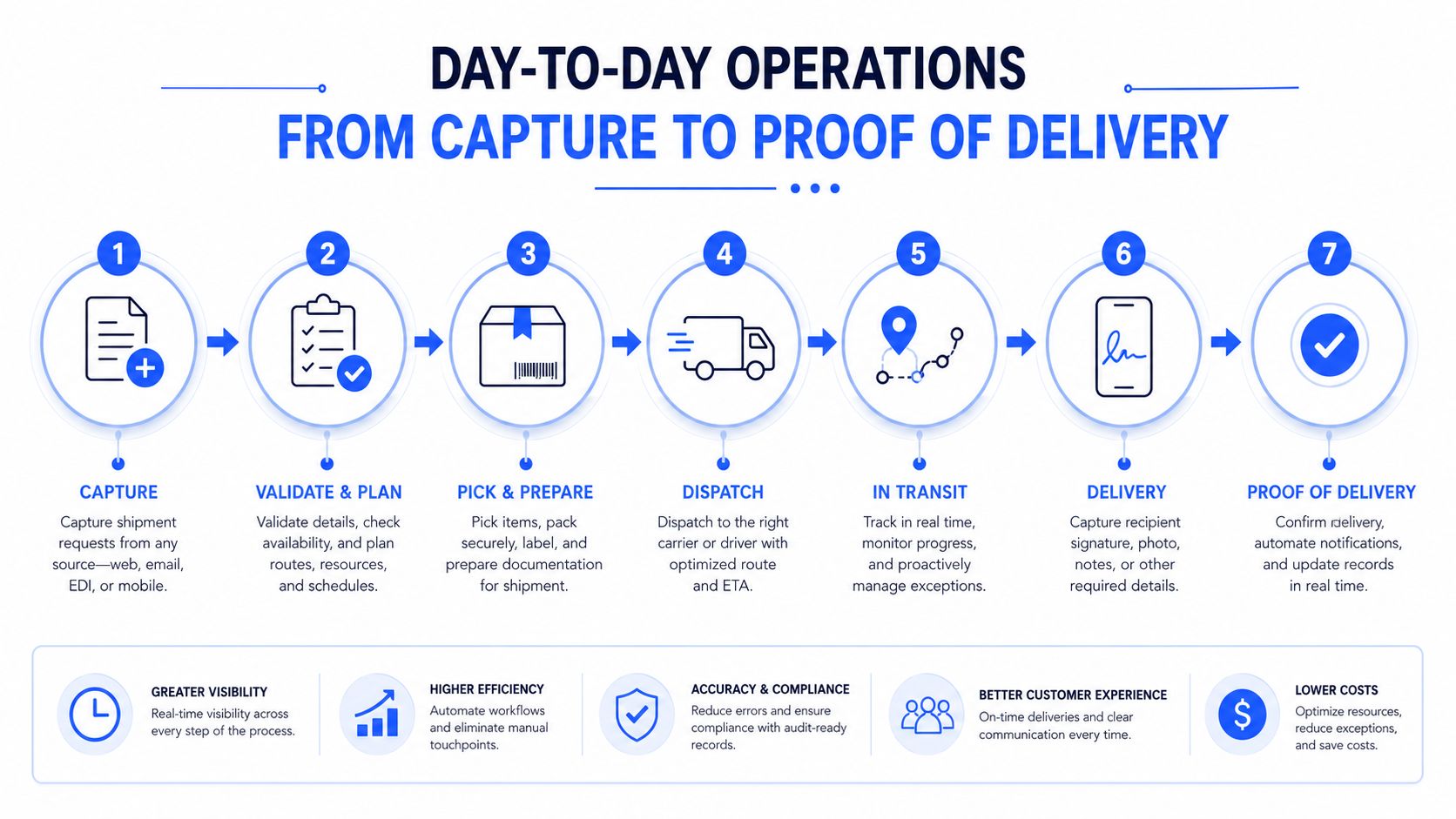
The business doesn’t run on trucking. It runs on information. Every load starts with a lead, and if you don’t capture that lead cleanly, the job gets lost before the truck ever moves.
Capture and Confirm
Inbound requests, broker emails, and load-board leads need one home. Not three inboxes, not a text thread, not a notebook. One place where you log the shipper, pickup, delivery window, rate, equipment needs, and any accessorials.
Once a load looks viable, review the rate confirmation carefully. Check pickup and drop times, commodity, detention terms, and who is responsible if the load gets refused. Then send the carrier packet or onboarding documents before the truck heads out.
Dispatch and Pickup
Good dispatch is not just telling a driver where to go. It’s assigning the correct truck or subcontractor, sending routing details, and keeping the customer updated with an ETA window. If the delivery window changes, the customer should hear it from you before they hear it from the dock.
At pickup, make sure the dock communication is clear, the BOL matches the load, and seal photos are captured if seals apply. If the paperwork is sloppy at pickup, it usually gets worse at delivery.
Practical rule: if the pickup documents are clean, the claim fight gets easier. If they’re messy, you’re already defending yourself.
Transit, POD, and Closeout
During transit, plan stop timing and set customer update triggers for delays, refusals, or exceptions. Don’t wait until a problem becomes a complaint. That habit protects relationships and keeps the operation from sounding chaotic.
At delivery, capture the proof of delivery with signatures, photos, and notes that survive a dispute. Then close the job with invoicing and file storage so the load doesn’t linger in your system. If you want a cleaner workflow for this handoff, proof of delivery software is worth studying before volume starts to pile up.
The platform layer matters here too. Routelink can handle capture, planning, dispatch, notifications, and delivery in one workflow, which is useful if your box truck business is already doing local delivery work and you need tighter control over the handoff between booked freight and completed proof.
If the load is profitable but the paperwork is weak, you’ll still feel broke.
Pricing, Customer Acquisition, and Hiring Versus Subcontracting
Price from the floor up. Start with your cost per mile, then add a margin floor of 15% to 25%, and compare the result against lane reality. If the lane can’t support your number, you either choose a different lane or decline the work.
How to Quote Without Guessing
For smaller customers, quote by the job when the scope is fixed. Quote by the hour when stop time, access, or delivery friction can change the day. Accessorials like wait time, liftgate use, and layovers aren’t bonus revenue. They’re how you stop hidden labor from eating your margin.
Customer acquisition should be practical, not glamorous. Local last-mile delivery contracts, regional LTL overflow, Amazon Relay, courier aggregators, and direct outreach to warehouses and furniture retailers all make sense for a new box truck business. Pick the channels that match your freight model, then stay consistent long enough to build repeat work.
Hiring or Subcontracting
| Factor | Owner-Operator | W-2 Driver | 1099 Subcontractor |
|---|---|---|---|
| Control | Full control | High control | Lower control |
| Insurance impact | Highest personal exposure | Employer burden rises | Depends on contract and coverage |
| Cash commitment | Lowest at the start | Highest | Moderate |
| Scheduling flexibility | High | Moderate | High if the subcontractor is reliable |
| Best use case | First truck, lean startup | Stable weekly volume | Peak periods or overflow |
Don’t rush into payroll. Run solo or with one truck through month six, then add the first subcontractor during a real peak period if the lane justifies it. Convert to W-2 only when the work produces consistent weekly volume and the insurance and admin burden make sense.
If you need help structuring driver workflows, the basics of hiring a delivery driver matter more than fancy recruiting language. The wrong hire can cost more than a slow week of freight.
Your First-Year Survival Checklist and Next Scaling Moves
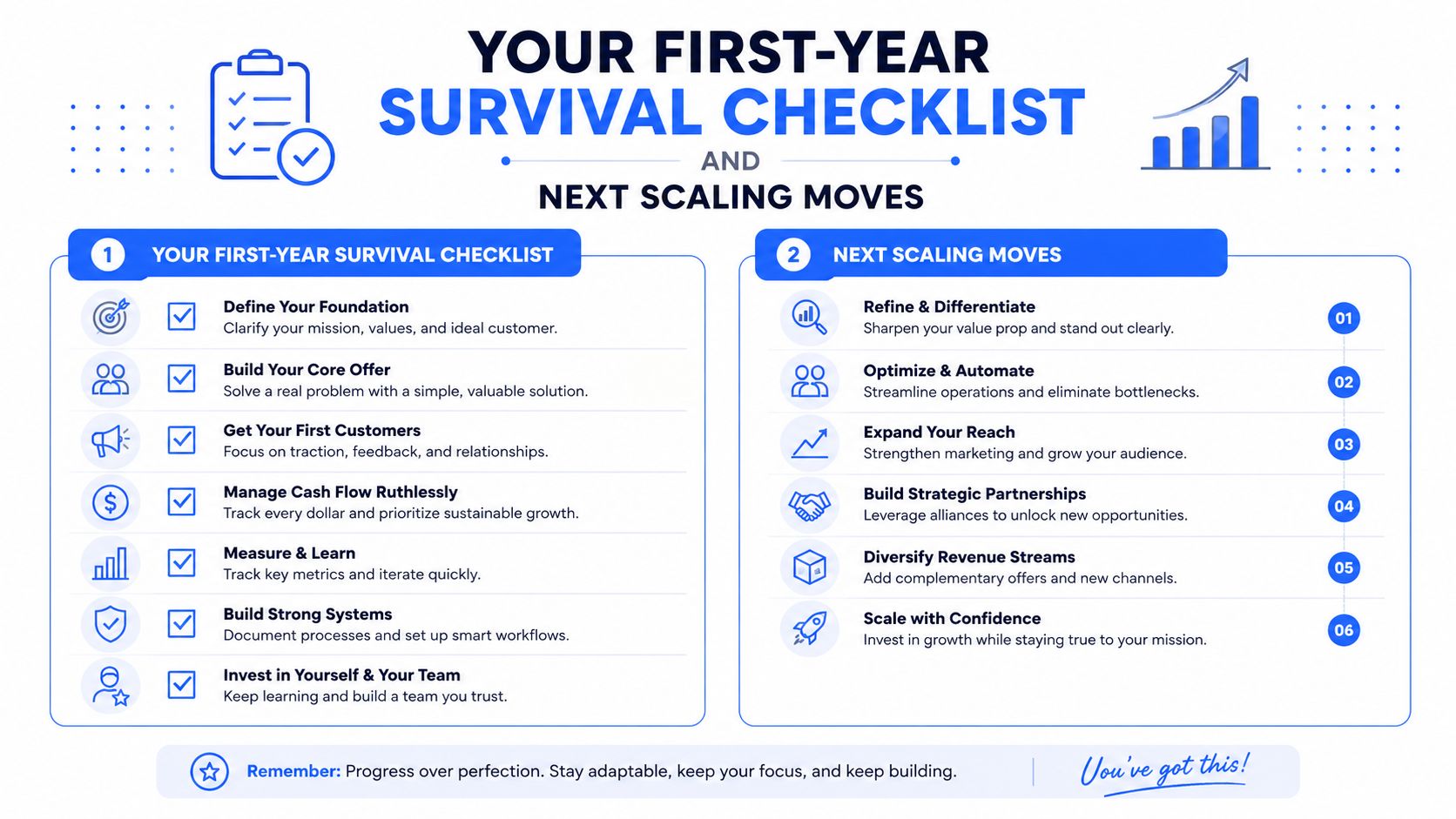
The first-year checklist is short because the business only survives if the basics are boring and repeatable. Keep cash in reserve, carry minimum viable insurance, diversify lanes, document POD cleanly, and review your cost per mile every week. If any one of those slips, your margin starts leaking fast.
The Yes or No Gates
Add a second truck only after 90 days of consistent per-load profit. Move from spot-market chasing to contracted or dedicated lanes once you prove that the same customers can keep you loaded without constant scrambling. Invest in telematics, factoring, and routing software only when monthly revenue justifies the fixed cost and the process will use the tool.
The biggest mistake is treating scale as a reward for enthusiasm. Scale is a response to stable operations. If the first truck is messy, the second truck multiplies the mess.
Bottom line: if the business can’t survive one truck cleanly, it won’t survive two trucks cheaply.
The safest path is still the least flashy one. Pick a freight model that fits your market, buy the right truck for that work, and protect cash flow like it’s part of the load. That’s how a box truck business gets past year one without donating profit to insurance companies and deadhead miles.
If you’re building a box truck operation and want cleaner dispatch, route planning, customer updates, and proof of delivery in one workflow, visit Routelink. It’s built to help local delivery businesses manage capture, plan routes, dispatch drivers, and close out POD without duct-tape processes.